
 How-to
How to Speed Up a Slow Conveyancing Process in the UK
Last Updated: November 19, 2026
Quick Summary
To speed up conveyancing, first find the specific task holding your transaction up and who it is waiting on. Then gather your documents early, instruct your conveyancer and apply for your mortgage promptly, and reply to requests within a day or two.
- Gather ID, proof of address, bank statements and your mortgage offer before your conveyancer asks for them.
- Instruct a conveyancer as soon as you start viewing seriously, or as soon as an offer is accepted.
- Answer conveyancer questions and requests within a day or two, since every day of delay adds to the timeline.
- Chase weekly with a short progress email, and call when a stage overruns to ask what it is waiting on.
- Do not rush legal checks on title, lease or searches, as skipping them can cause expensive problems after completion.
Table of Contents
- Why Conveyancing Takes So Long: Diagnosing the Delay
- Step 1: Gather Your Documents Before You Need Them
- Step 2: Instruct Your Conveyancer and Secure Your Mortgage Offer Early
- Step 3: Understand the Conveyancing Process Timeline by Stage
- Step 4: Respond Quickly and Chase at the Right Intervals
- Troubleshooting Common Delays and When to Escalate
- Your Next Step: Book a Conveyancing Review With UKC Legal
- Frequently Asked Questions
Why Conveyancing Takes So Long: Diagnosing the Delay
Most people assume their conveyancing is slow because the solicitor is slow, but the real fix is knowing how to speed up conveyancing by finding the true bottleneck. That is sometimes true, but it is rarely the whole story.
Across residential transactions of every kind, the same bottlenecks tend to come up again and again. Start by asking your conveyancer for a clear list of what is outstanding and who it is waiting on. A transaction that is stuck waiting for the buyer's mortgage documents needs a very different response from one that is stuck waiting for the seller's solicitor to reply.
Common causes of delay to look for:
- Missing identity or source of funds documents
- A slow reply from the seller or the seller's conveyancer
- Local authority searches taking longer than usual
- A mortgage offer that has not yet been issued or signed
- Questions raised by the title or the lease that need checking
Once you know the cause, the fix is usually clear. Documents need sending, a question needs answering, or a third party needs a reminder. Until you know what the hold-up is, chasing everyone at once will only add noise.
Step 1: Gather Your Documents Before You Need Them
The fastest way to slow a transaction down is to make your conveyancer wait for paperwork, so gathering it early is one of the simplest ways to speed up conveyancing. Gather everything early, before the solicitor asks for it.
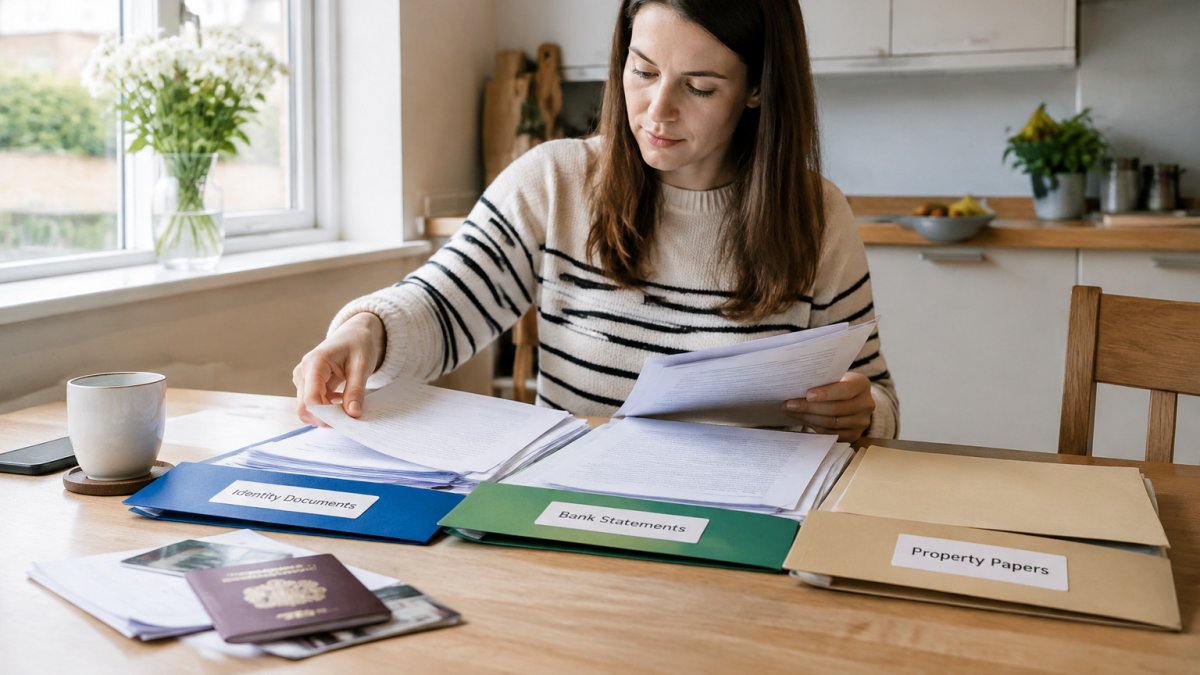
For most buyers, this means:
- Photo identification, such as a passport or driving licence, plus proof of address
- Bank statements showing where your deposit has come from
- Your mortgage offer, once issued
- Details of any gifted deposit, with a signed letter if relevant
- Your national insurance number
Sellers should also have the title deeds to hand if they are registered, along with any guarantees for works done to the property and any leasehold documents if the flat is leasehold.
Tip: Keep everything in one labelled folder, digital or paper. When your conveyancer asks for something, you can send it the same day rather than hunting for it for a week.
Step 2: Instruct Your Conveyancer and Secure Your Mortgage Offer Early
Do not wait until your offer has been accepted to find a conveyancer. Instruct one as soon as you start viewing seriously, or at least as soon as an offer is accepted. Early instruction means the searches can be ordered and the paperwork started while the rest of the chain is still moving.
If you are buying with a mortgage, apply for it as early as you can. A mortgage offer is often the last thing to arrive, and a delay here can stall completion even when everything else is ready. Ask your lender how long the offer usually takes and whether a valuation has been booked.
Sellers should do the same. Instructing a conveyancer early means the draft contract pack can be prepared before a buyer is found, which saves weeks later.
Step 3: Understand the Conveyancing Process Timeline by Stage
Knowing what happens at each stage helps you spot when things are running late. A typical sale or purchase moves through roughly these stages, and each has its own realistic timescale. Use the ranges below as a guide, not a promise, your own timeline depends on the chain, the lender, the property type and how quickly everyone responds.
- Instruction and paperwork: your conveyancer opens the file, sends you the client care pack and asks for ID, source-of-funds evidence and the completed property information forms. The clock starts when you return these, not when you instruct.
- Searches ordered and returned (timescale varies): local authority, environmental, drainage and water searches are ordered. Local authority searches are ordered from the council covering the property, and turnaround times vary through the year, ask your conveyancer for the current quoted time when the search is ordered, because a slow search is one of the most common reasons a transaction stalls.
- Enquiries and contract review: your conveyancer reviews the draft contract and title, raises enquiries with the seller's solicitor, and reviews the search results. Leasehold properties usually need more enquiries (management pack, service charges, ground rent, lease terms) and therefore take longer.
- Mortgage offer and funds: the lender instructs a valuation, underwrites the application and issues a formal offer. A mortgage offer is often the last thing to arrive, and a delay here can stall completion even when everything else is ready.
- Exchange of contracts: both sides sign, the deposit is paid and the completion date is fixed. Nothing is legally binding until exchange.
- Completion: the money is sent and the keys change hands.
As a rough overall guide, completion times depend on the chain, the lender and the property type, and UKC Legal can give you an indication for your own transaction when you get a quote. Chain-free and cash purchases can often move faster, while long chains and leasehold flats with management packs can take longer.
Watch out: do not treat any timescale as a deadline you can hold a conveyancer to. Searches, lenders and the other side's solicitor are outside your conveyancer's control, and pressing for a date that cannot be met only adds friction.
Each stage has its own realistic timescale, so you can spot where your transaction is running late.
| Stage | What happens | Timescale |
|---|---|---|
| Instruction and paperwork | Client care pack sent, ID and funds evidence provided | Clock starts when forms are returned |
| Searches ordered and returned | Local authority, environmental, drainage and water searches | Varies; ask for current quoted time |
| Enquiries and contract review | Draft contract and title reviewed, enquiries raised | Longer for leasehold properties |
| Mortgage offer and funds | Valuation, underwriting and formal offer issued | Often the last item to arrive |
| Exchange of contracts | Both sides sign, deposit paid, completion date fixed | Nothing binding until exchange |
| Completion | Money sent and keys handed over | Final stage |
Step 4: Respond Quickly and Chase at the Right Intervals
Speed depends on replies. When your conveyancer sends a question or request, answer it within a day or two. Every day you wait is a day added to the timeline.
Chasing works best when it is measured. Here is a simple schedule many buyers and sellers find useful:
- Weekly: a short email asking for a progress update on your transaction
- When a stage overruns: a call to ask what it is waiting on, and whether you can help
- Before key dates: a check that the mortgage offer, searches and funds are on track before exchange and completion
Keep a simple log of who you spoke to, when, and what they said. This makes it much easier to escalate later if you need to.
Troubleshooting Common Delays and When to Escalate
Some delays are normal. Others need action. The most useful thing you can do is stop chasing everyone at once and instead diagnose the exact stalled task. Work through this checklist for each outstanding item:
- What is the task? For example: local authority search returned, draft contract reviewed, mortgage offer issued, enquiry answered, management pack received.
- Who is responsible for it? Your conveyancer, the seller's conveyancer, the lender, the search provider, the local authority, or you.
- When was it last actioned? Ask for the date of the last correspondence or update on that specific item.
- What is the next step and who owns it? Get a named contact and a date.
- What can you do to unblock it? Send a missing document, sign a form, pay a fee, or authorise your conveyancer to chase.
Once you have that, you can target your chase rather than adding noise. A transaction stuck waiting for the buyer's mortgage documents needs a different response from one stuck waiting for the seller's solicitor to reply.
If the delay is on your side, fix it the same day. If it is with your conveyancer, ask for a specific update and a date for the next step. If it is with the other side, ask your conveyancer to chase them directly and confirm when they last did so.
If you are getting no replies, or your conveyancer is missing agreed deadlines, escalate proportionately:
- Raise it in writing with your named case handler, setting out the specific task, the date it was last actioned and what you need. Ask for a response within a stated period, such as five working days.
- Ask for a named contact at a more senior level if the case handler does not respond.
- Make a formal complaint to the firm under its complaints procedure. Solicitors and licensed conveyancers regulated in the UK are expected to have a complaints procedure, and you can ask your firm for details of it.
- Refer the matter to the relevant redress scheme if the firm's complaint response does not resolve it. Ask the firm which redress scheme applies to your case, as this depends on whether your conveyancer is a solicitor or a licensed conveyancer. Ask the firm for its complaint response letter, which should set out the redress route and any time limits.
Switching conveyancer mid-transaction is possible but adds cost and delay, so raise concerns early and in writing. Keep a simple log of who you spoke to, when, and what they said, it makes escalation much easier.
Watch out: do not rush the legal checks to save time. Skipping title, lease or search review can create expensive problems after completion, and no escalation route can undo a missed defect.
Your Next Step: Book a Conveyancing Review With UKC Legal
If your transaction feels stuck, a short review can show exactly where it is held up. UKC Legal assigns a dedicated case handler to every client, with fixed fees and no hidden costs. Get a quote today and move your transaction forward with a clear plan.
Frequently Asked Questions
How can I speed up the conveyancing process?
The fastest gains come from preparing documents before your solicitor asks for them, instructing your conveyancer as soon as you have an agreed sale or purchase, and returning forms the same day they arrive. Make sure your mortgage offer and proof of funds are ready early, and reply promptly to enquiries from your solicitor or the other side. Keeping a simple log of what has been sent and when helps you spot stalled steps quickly, so you can chase the right party rather than waiting passively for weeks.
How often should I chase my conveyancing solicitor?
A sensible rhythm is a short update request roughly every one to two weeks while the case is active, and more often around key milestones such as the search results, the contract exchange and the agreed completion date. Ask specific questions rather than general ones, such as whether the seller's contract pack has been received or whether the lender has issued its final certificate. If you have not had a reply within two working days of a clear question, follow up in writing and copy in your case handler.
What documents do I need for conveyancing?
Most buyers need photo identification and proof of address, proof of the source of funds for the deposit, and their mortgage offer once issued. Sellers typically need title deeds or confirmation of the registered title, the property information form, fixtures and fittings details and, for leasehold homes, the management pack. Having these ready at the start avoids the common delay of waiting for anti-money-laundering checks to be completed.
Can a chain delay my house purchase?
Yes. A chain only moves as fast as its slowest link, so a delay for one buyer or seller can hold up everyone else. Ask your conveyancer to confirm where each transaction in the chain currently stands, and agree a target exchange date with all parties early. If a link in the chain is clearly stalled, your solicitor can contact the other conveyancer directly to ask what is outstanding and whether a deadline can be set.